This post contains affiliate links. If you buy through them, we may earn a small commission at no extra cost to you. Learn more.
Thanksgiving table setting ideas don't need a big budget. A warm table comes from layers, lighting and a few natural touches, not from buying a whole new set of decor. This year Thanksgiving falls on November 26, so you have plenty of time to plan. Below are 15 ideas that mostly use things you already own, things you can forage for free, or a few small, inexpensive buys.
The goal is a table that feels welcoming, where guests can sit comfortably, reach the food and talk across the table. That matters more than a perfect magazine look. If you keep that in mind, every choice gets easier: does this add warmth, or does it just take up space?
Quick plan before you start
- Pick 2-3 colors (cream, rust and green are an easy mix) and stick to them.
- Keep the centerpiece low so everyone can see each other.
- Add warm light, since it changes the mood more than anything else.
- Check how many people you are seating and leave room for the serving dishes.
1. Start with a neutral base
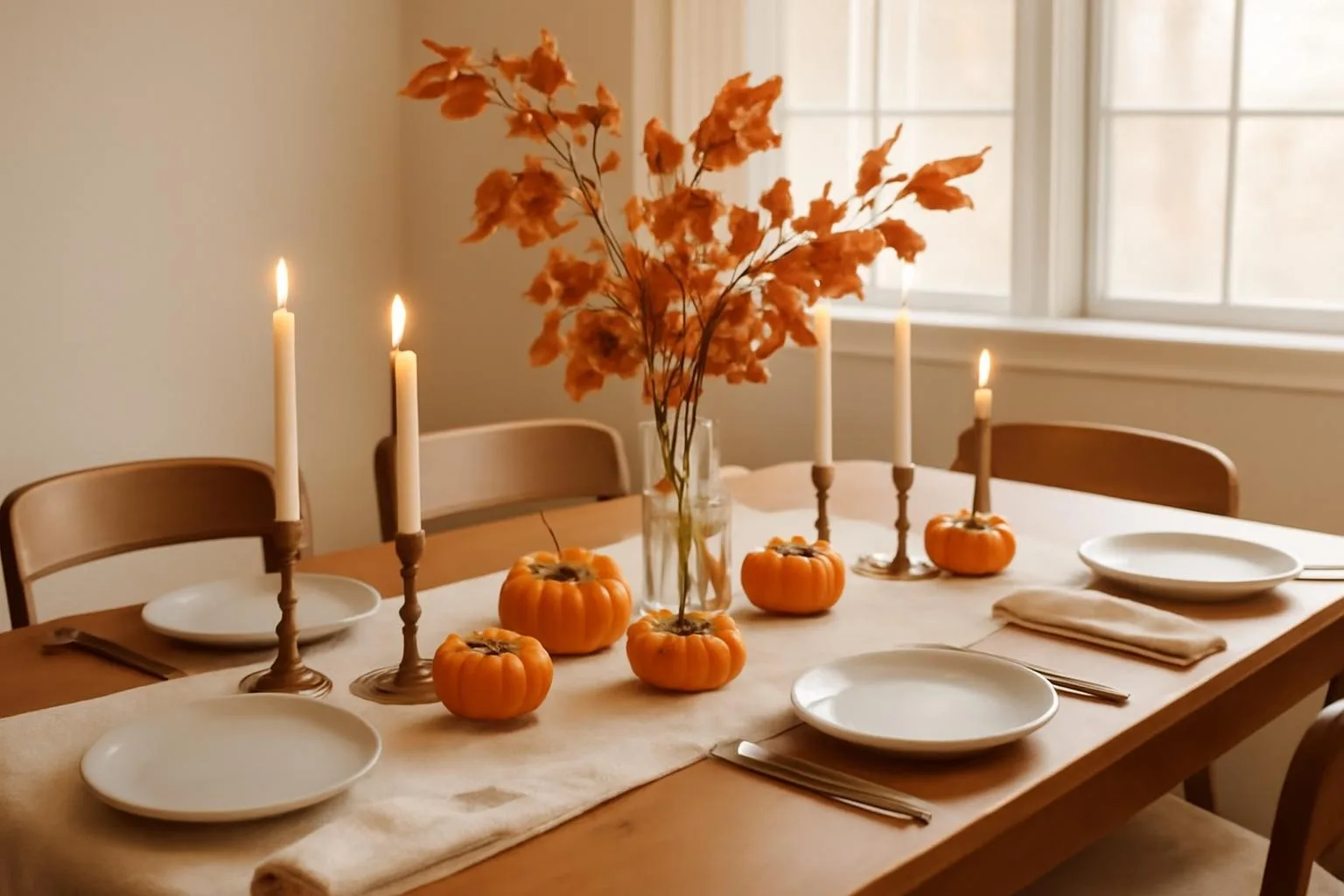
White or cream plates and linens let everything else stand out, and they make colorful touches such as pumpkins and leaves look intentional. If you already have plain dinnerware, use it. Neutral basics also work again for every other holiday, so they are a smart buy if you need to add anything. If you only have a few matching plates, use them for the main course and mix in others for dessert.
2. Use fabric as a table runner
A runner doesn't have to be a "table runner." A length of linen, cotton or burlap fabric, cut to size, does the same job for a fraction of the cost. Raw edges look relaxed and natural. Iron it flat, lay it down the center and you have a base for everything else. Choose a color that fits your palette, such as cream, rust or soft green, and let the ends hang a few inches over each side.
3. Forage a centerpiece
Branches, dried leaves, acorns and seed pods cost nothing. Put a few branches in a tall jar or pitcher and add a handful of leaves around the base. Rinse and shake out leaves first so nothing surprising comes inside. If you don't have a yard, a short walk in a park (where picking is allowed) can give you plenty. Keep the arrangement narrow so it doesn't block the view or take over the table.
4. Scatter mini pumpkins and gourds
Small pumpkins and gourds are cheap, last for weeks and can be eaten or composted afterwards. Scatter them along the runner at different heights instead of lining them up in a row. A mix of white, orange and green looks natural, and a few stacked on a plate or cake stand gives the table a bit of height without much cost.
5. Mix tapers in mismatched holders
Candlelight makes a budget table look expensive. Use taper candles in whatever holders you have: brass, glass or ceramic. Mixed shapes look collected, not matched. Keep flames away from leaves and branches, and never leave candles burning unattended. If you have children or pets at the table, battery-operated candles are a safe alternative that still give a soft glow.
6. Add a sprig at each place
A small sprig of rosemary or eucalyptus tucked into the napkin adds color and a light scent for almost no money. It also saves you from buying place decorations. Tie it with kitchen twine or a thin strip of fabric, or simply tuck it under the napkin fold.
7. Handwrite place cards
Cut kraft paper or cardstock into small cards and write each name by hand. It feels personal, helps guests find their seat and costs only a pen. For a seasonal touch, write names on clean, dry leaves. Place cards also help you plan who sits next to whom, which can make the dinner more relaxed.
8. Mix and match your ceramics
Matching sets for a big group can be expensive. Thrift stores and your own cupboards are full of plates that work together if they share a color family. Mixed plates make the table feel layered and lived in. Stick to one or two colors, such as whites and creams, so the table still looks planned.
9. Layer placemats under the plate
A woven or wooden placemat under each plate adds texture. If you don't own any, flat wood slices or sturdy paper mats can do the same job. Textures such as woven, wood and linen are what make a table look rich, even when everything else is simple. Layering a plain plate over a patterned or textured mat is an easy way to add interest.
10. Dim the overhead light
This one is free. Turn off the harsh ceiling light and use lamps, string lights and candles instead. Warm, low light flatters the food, the table and your guests. If you can't dim the main light, turn off half of it or move a lamp closer to the table.
11. Use a fruit bowl as the centerpiece
Pears, apples and pomegranates in a wide bowl or on a wooden board look beautiful and you can eat them afterwards. Pile them loosely and keep the bowl low. Add a few sprigs of greenery between the fruit, and tuck in a taper candle or two on either side for a fuller look.
12. Add a gratitude touch
Put a small card at each seat and ask guests to write one thing they are thankful for, then read a few aloud. It turns decoration into a tradition and costs almost nothing. You can also hang cards on a branch in your centerpiece jar, so the decor and the activity are the same thing.
13. Set a kids' table with butcher paper
Cover the table with plain paper and leave crayons in a cup. Kids stay busy, and a spill ends up in the trash, not on a nice cloth. Draw a simple turkey outline for them to color, or write each child's name at their seat.
14. Keep the table clear for food
Leave room for serving dishes. A few small pieces down the center look better and work better than a crowded display. Anything taller than a wine glass blocks conversation, so keep it low. If space is really tight, serve the food from a counter or side table and keep the dining table for plates and a few decor pieces.
15. Set the table the night before
Lay the cloth, plates, glasses and candles the evening before, and add fresh items such as herbs and fruit in the morning. A calm start makes the whole day feel easier, and you can fix anything that looks off while you still have time.
What to buy and what to skip
If you only spend money on a few things, choose items that work for more than one holiday: neutral napkins, taper candles and a simple fabric for the runner. Skip single-use decor such as themed plates or large sets of ornaments, which cost more and take up storage space for the rest of the year. Free and low-cost items such as branches, fruit and handwritten cards often look best anyway.
Common mistakes to avoid
- Too many colors. Stick to two or three.
- A tall centerpiece. It blocks eye contact and makes the table feel crowded.
- Candles near leaves or branches. Keep flames well away from anything dry.
- Too much decor. Guests need space for plates, glasses and serving dishes.
- Setting up at the last minute. Do as much as you can the night before.
How to set a basic Thanksgiving place setting
Put the dinner plate in the center and the fork on its left. The knife goes on the right with the blade facing the plate, and the spoon sits next to the knife. The water glass goes above the knife. Fold the napkin on the plate or place it to the left of the fork. For a dessert fork or bread plate, set them above the dinner plate or on the left.
Thanksgiving table FAQ
Use what you have: neutral plates, a fabric runner, foraged branches, mini pumpkins and candles. Warm lighting adds the most impact for the least money.
A centerpiece that stays low, candles, place settings, napkins and a few seasonal touches such as gourds or fruit. Leave enough space for serving dishes.
You can set plates, glasses and linens the night before. Add fresh herbs, fruit and candles on the day so they stay fresh.
Cream, rust, deep green and warm brown are classic and easy to mix. Choose two or three and repeat them across the table.
Shop the look
Flameless LED Candles with Remote, 9 Pack
Battery candles in mixed heights
Check price on Amazon