This post contains affiliate links. If you buy through them, we may earn a small commission at no extra cost to you. Learn more.
Fridge organization ideas help you see what you have, use food before it spoils and keep the fridge clean. Most of us have lost half a lemon or a forgotten leftover at the back. A simple system with zones, clear bins and a few habits solves that, and it is usually less work than you expect.
This guide gives you 13 ideas, a step-by-step plan and basic storage tips. It works for a small apartment fridge and a large family one. The food-safety notes are general guidelines, so check local advice if you have specific concerns.
The method in four steps 1. Take everything out, throw away expired or spoiled food and wipe the shelves. 2. Group items: drinks, dairy, produce, leftovers, meat, condiments and snacks. 3. Give each group a spot, and use bins or trays to keep them together. 4. Put the foods you need to use soon at the front and at eye level.
1. Start with a clean-out
Empty the fridge, check dates and smell before you keep anything questionable. Wipe shelves and drawers with warm soapy water, and dry them. It's also a good moment to check that the fridge is cold enough, since the usual guidance is to keep it at or below 40°F (4°C).
2. Use zones
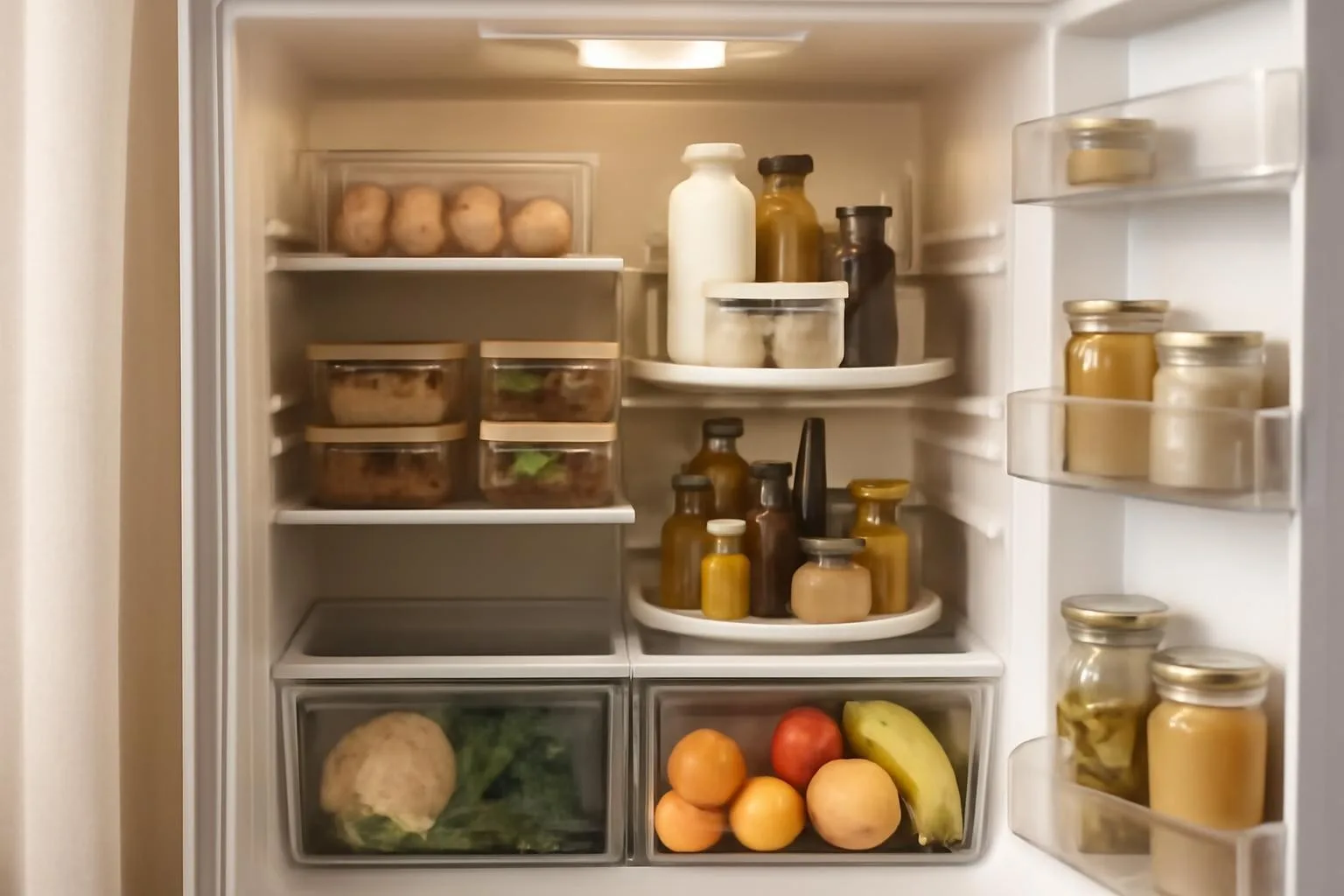
Group similar items. For example, put dairy on one shelf, drinks on another, and leftovers in one clear spot. Zones make it easy to find and return items and to see when you are running low.
3. Put raw meat on the bottom shelf
Store raw meat, poultry and fish on the lowest shelf in sealed containers or on a tray, so any drips can't land on other food. This is a basic food-safety habit.
4. Use clear bins
Clear bins keep small items, such as yogurts, cheese and sauces, together and let you pull out a whole group at once. Choose bins that fit your shelf depth and are easy to wash.
5. Keep a "use first" bin
Put items that need to be eaten soon, such as opened packages and leftovers, in one bin at the front. Check it each time you plan meals.
6. Use the crisper drawers properly
Drawers are for produce. Many fridges have a drawer for items that wilt and one for items that rot. Keep fruits and vegetables separate if your fridge has two drawers, and don't wash produce until you use it, unless you dry it well.
7. Store leftovers in clear containers
Clear, stackable containers let you see what is inside. Label them with the date, and eat leftovers within a few days. A common guideline is three to four days, but check local advice.
8. Use the door for condiments only
The door is the warmest part of the fridge, so keep sauces, jars and juices there, and keep milk and eggs on the main shelves where it's colder.
9. Add a lazy susan
A turntable helps you reach jars and bottles at the back of a deep shelf. It also keeps the items from getting lost.
10. Use shelf risers or stackable shelves
A small riser creates two levels in a tall space and helps with items such as cans, jars and packets. Make sure the riser doesn't block air flow.
11. Label shelves and bins
Simple labels, such as "dairy," "snacks" and "use first," help everyone in the house put things back in the right place.
12. Leave a little space for air
A fridge needs air flow to stay cool, so don't pack it too full. Leave gaps between items and don't block vents.
13. Do a quick weekly reset
Before you shop, check what you have, throw away what is spoiled, wipe up spills and bring items to the front. Five minutes a week keeps the system running.
A simple weekend plan
- Saturday morning: Empty the fridge, check dates and wipe the shelves.
- Saturday afternoon: Group items into zones and decide on bins and containers.
- Sunday: Set up the bins, label shelves and restock, putting older items in front.
Budget tips
Reuse clean jars and containers, and use small baskets or trays you own instead of buying matching sets. Start with two or three bins, such as one for dairy and one for snacks, and add more if needed. Buy containers with the same shape so they stack neatly.
Small fridge tips
In a small fridge, shop in smaller amounts, use stackable containers and keep the shelves free of items that don't need to be cold. Use the freezer for bread, cooked grains and leftovers you won't eat soon, and label them with the date.
Fridge storage guide by food
- Top shelves: ready-to-eat foods, such as leftovers, drinks and snacks.
- Middle shelves: dairy, eggs and deli items.
- Bottom shelf: raw meat, poultry and fish, in sealed containers.
- Crisper drawers: fruits and vegetables, kept separate if you have two.
- Door: condiments, sauces and juices.
Keep strong-smelling foods in sealed containers so they don't affect others, and keep opened packets closed. These are general guidelines, and your fridge may be laid out differently, so adapt them to fit your model.
Freezer organization tips
Use flat, stackable bags or containers and label each with the contents and the date. Freeze food in meal-size portions and lay bags flat so they stack like books. Keep a list of what's in the freezer on the door, and use the oldest items first. A freezer that is packed but not jammed keeps the air moving and helps food stay frozen.
Plan a quick weekly fridge menu
Before you shop, look at what's in the fridge and plan two or three meals using items that need to be eaten soon. Write down what you need to buy, and skip what you already have. This small habit reduces waste and saves money.
Quick fridge checklist
- The fridge is clean and set at or below 40°F (4°C).
- Raw meat is on the bottom shelf in sealed containers.
- Leftovers are in clear containers with a date.
- A "use first" bin is at the front.
- The door holds only condiments and juices.
- There is room for air to move.
A fridge that meets these points is easier to use and wastes less food.
Common mistakes to avoid
- Overfilling the fridge. Air needs to move.
- Storing milk in the door. It is the warmest spot.
- Raw meat on upper shelves. It can drip onto other food.
- No system for leftovers. They get forgotten.
- Skipping the weekly check. Food spoils and clutter builds.
Final thoughts
A well-organized fridge saves money, saves time and makes meal planning easier. Start with one shelf, add a few clear bins and make the weekly check a habit. The simplest system you will actually use is better than a perfect one you won't.
Fridge organization FAQ
Group items into zones, keep raw meat on the bottom shelf, use clear bins and put foods you need to eat soon at the front.
On the main shelves, not the door, because the door is the warmest part.
Use a "use first" bin, label leftovers with dates and check the fridge before you shop.
A quick wipe each week and a deeper clean every few months works for most homes.
The usual guidance is at or below 40°F (4°C). Check your fridge with a thermometer.
Use clear bins, matching containers and labels, and keep similar items together on the same shelf.
Shop the look
LAMU Clear Lazy Susan Turntable, 4 Pack
Spin to reach spices and jars
Check price on Amazon